
Paver Installation
Brick paver installation in Metro Detroit
New patios, walkways, driveways, steps and landings in clay brick and concrete paver — set on a compacted base so they hold their line through Michigan freeze-thaw.
What's included
Paver Installation in Metro Detroit
A paver surface is only as good as what sits under it. Most of the work on an install happens before a single paver goes down: excavating to depth, laying and compacting an aggregate base in lifts, and screeding a sand setting bed dead flat. Get that right and the surface stays where you put it. Skip it and the finished job telegraphs every soft spot in the ground within a couple of winters.
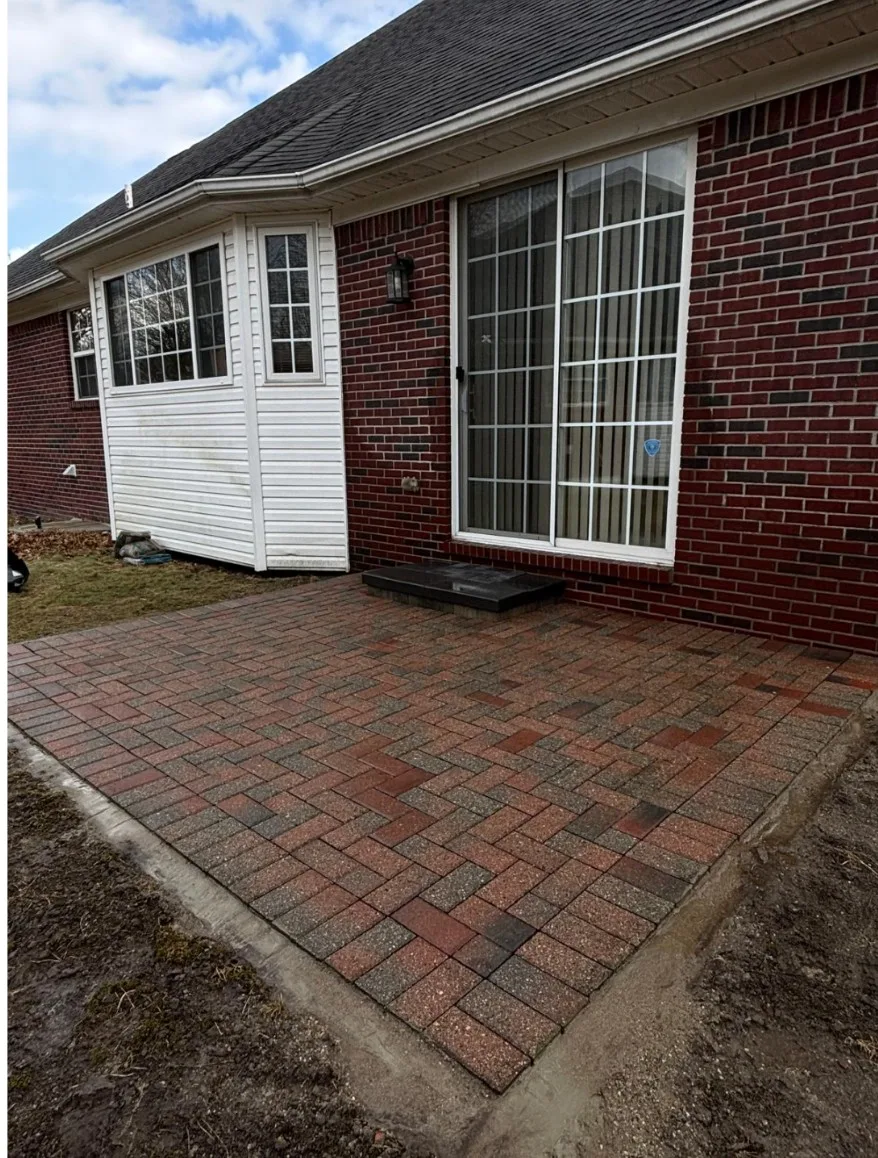
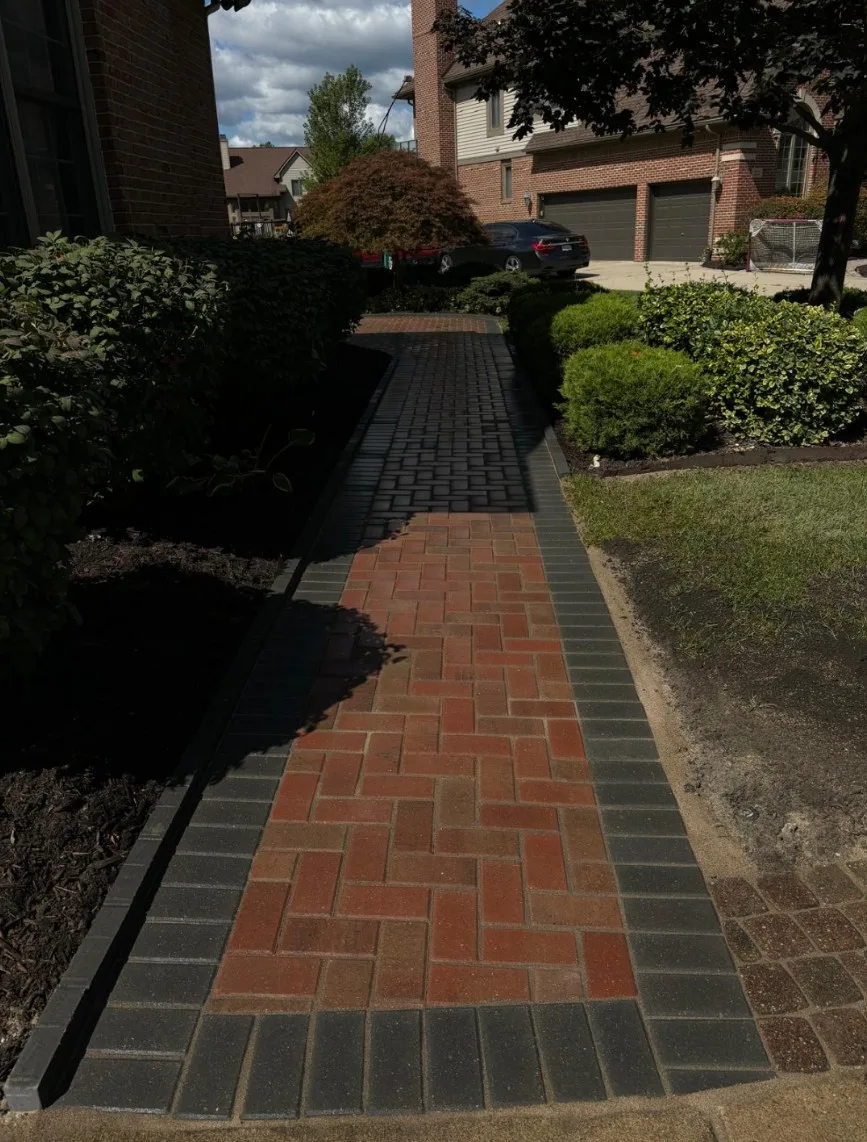
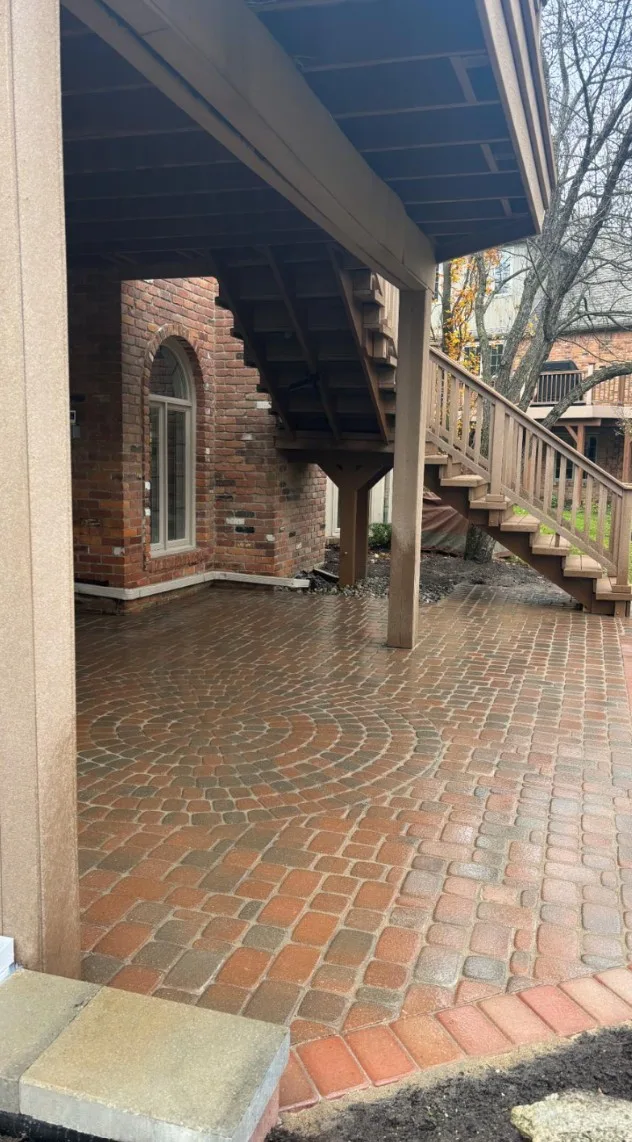
Phoenix Daya installs patios, walkways, driveways, front steps and landings across Detroit and the surrounding Metro Detroit communities. We work in clay brick and concrete paver — running bond, herringbone, fan and tumbled cobble patterns — with soldier-course borders and cut edges where the layout calls for them.
Pavers also suit this climate better than a poured slab. A slab cracks when the ground under it moves; a paver field flexes, and any section that ever does settle can be lifted and re-set instead of demolished.
What you get
- Patios, walkways, driveways, front steps and landings
- Clay brick and concrete paver in the pattern and color you choose
- Excavation and compacted aggregate base, to the depth the use calls for
- Screeded sand setting bed, pinned edge restraint and polymeric sand joints
- Soldier-course and cut borders to finish the edges cleanly
- Site cleaned down and debris hauled away when we finish
What to expect
How a paver install goes
No mystery and no surprises — here is the order the work actually happens in.
Layout
We mark the shape on the ground with paint or line and walk it with you before anything is dug. Moving a line now costs nothing; moving it after the base is in costs a day.
Excavation
Sod and soil come out to the depth the job needs — deeper for a driveway than for a walkway, because a driveway carries vehicles.
Base and compaction
Aggregate base goes in and is compacted in lifts rather than all in one go. This is the step that decides whether the surface is still flat in five years.
Sand setting bed
A sand bed is screeded flat over the compacted base for the pavers to bed into, at a consistent depth across the whole field.
Paver installation
Pavers are laid to the chosen pattern, working off a straight line, with cuts made to fit curves, borders and any obstruction.
Edge restraint
Restraint is pinned around the perimeter so the field cannot creep outward under load. Unrestrained edges are the most common reason a paver surface spreads.
Polymeric sand and cleanup
Polymeric sand is swept into the joints and set, the surface is compacted and washed down, and the site goes back tidy.
Our work
Paver installations
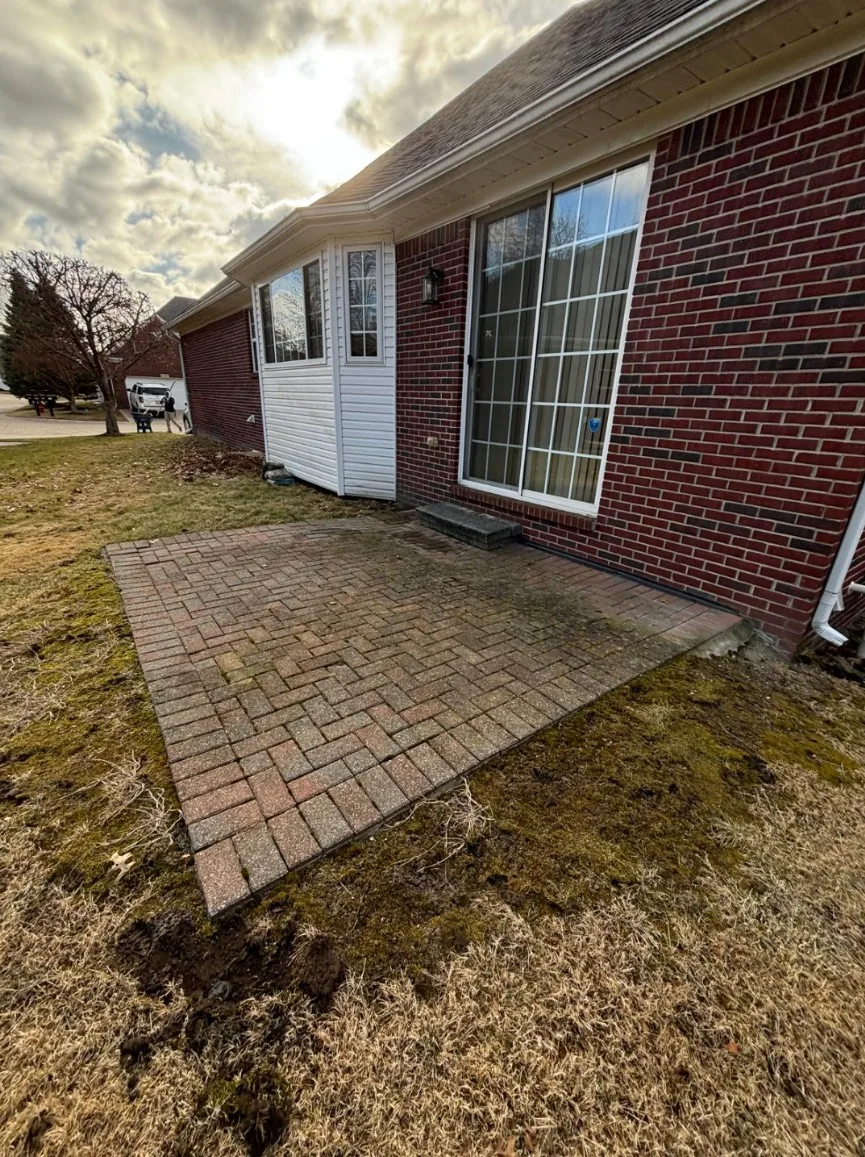
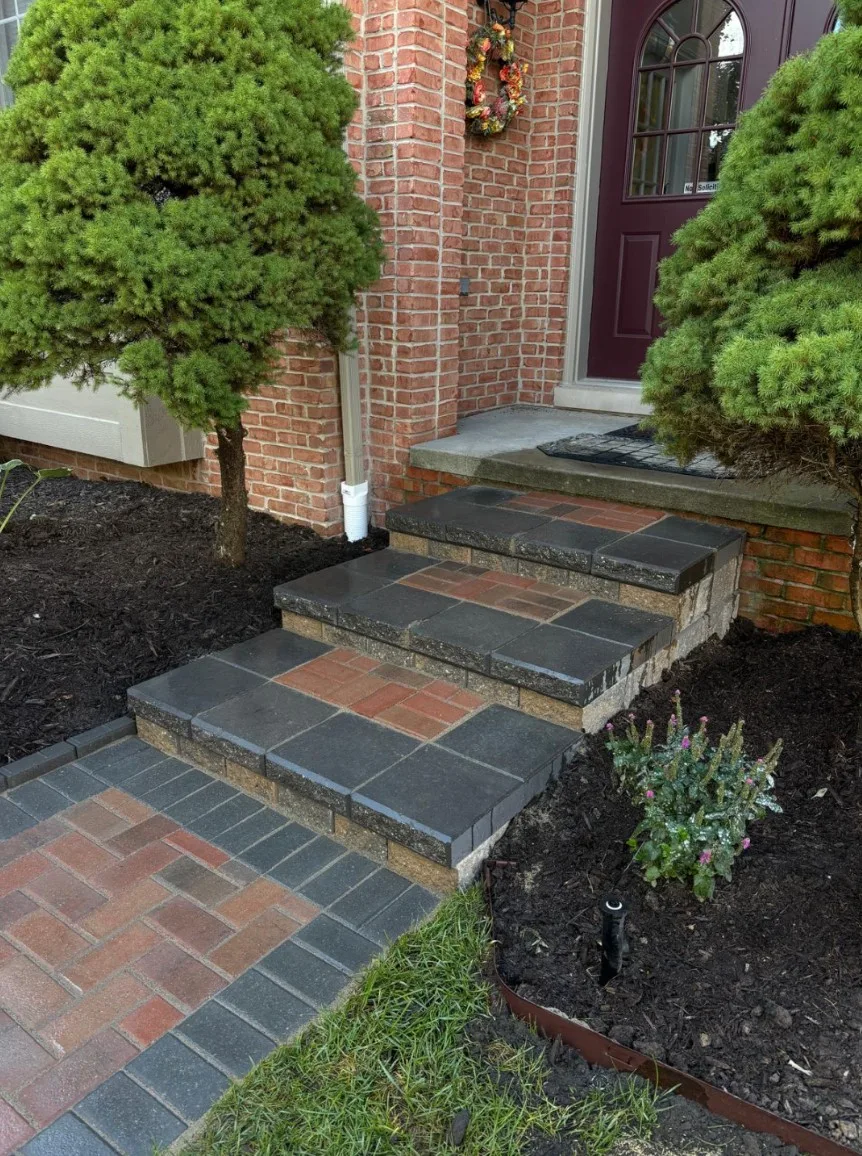
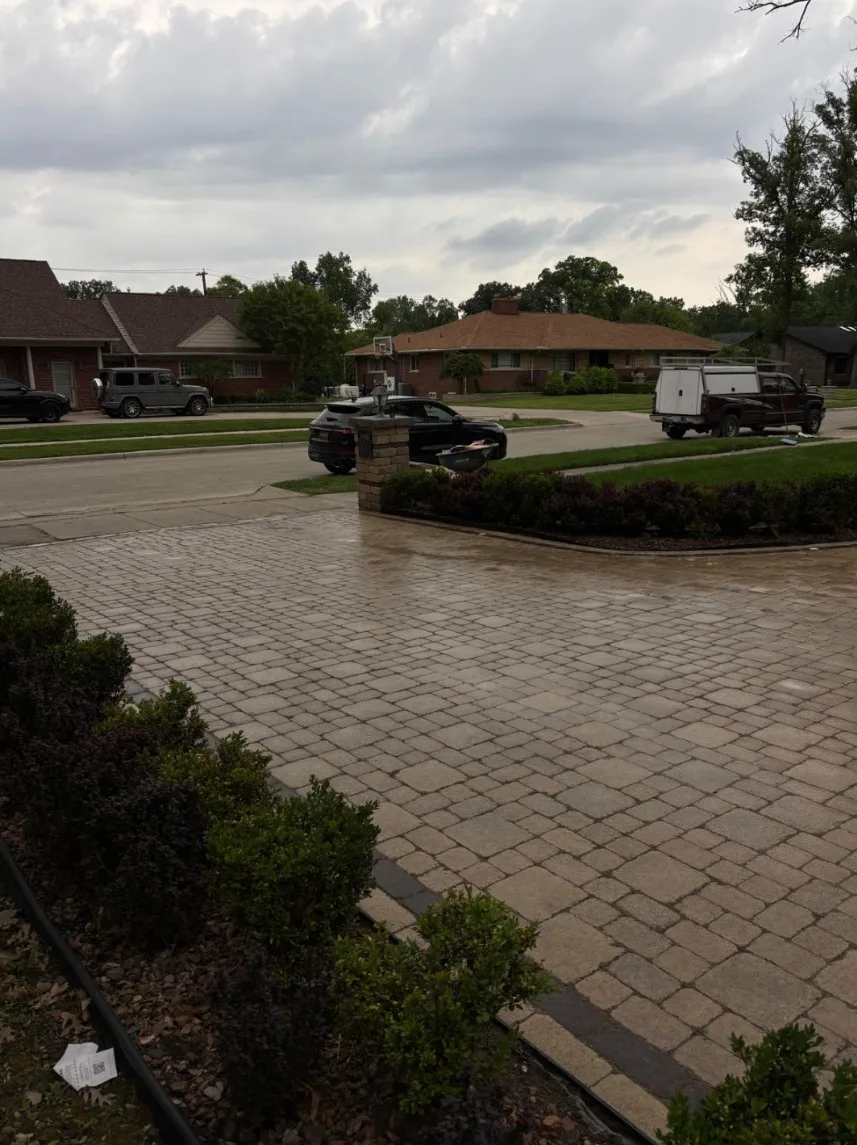
Phoenix Daya jobs — patios, walkways, driveways and entry steps.
Questions
Paver Installation FAQ
How long does a paver patio take?
It depends on size, access and how much excavation is involved. A small walkway can be a day or two; a large patio or a full driveway is longer. We give you a realistic window with the estimate rather than a number that sounds good on the phone.
Clay brick or concrete paver?
Both work here. Clay brick keeps its color because the color runs all the way through, and it reads traditional against an older brick house. Concrete pavers come in more shapes, sizes and textures — including tumbled cobble — and usually cost less per square foot. We will show you what suits the house and the budget.
Can you match the brick on my house?
Often closely, rarely exactly — matching aged brick is difficult. The usual approach is to choose a paver that sits comfortably with the house and use a contrasting border course so the choice reads as deliberate rather than as a near miss.
Will it move in a Michigan winter?
Some seasonal movement is normal, and that is a point in favor of pavers rather than against them. A paver field flexes with frost instead of cracking like a slab, and individual sections can be lifted and re-set if they ever do settle.
Do you charge for the estimate?
No. Estimates are free everywhere we work, and you will be talking to the person who does the job.
Free estimate on paver installation
Tell us the size and what's there now, and we'll price it. Phoenix Daya Brick Paving LLC covers Detroit and communities across Southeast Michigan.
Get a price
Ask about paver installation
Send the details and we'll come back with a number. Prefer to talk it through? Call instead — it's usually faster.
Also from Phoenix Daya
Other services
Paver Installation near you
Every community we cover has its own page. Start with the closest one to you.
- DetroitPatios, walks, driveways and repairs across the city.
- DearbornPaver work and year-round upkeep west of the city line.
- Dearborn HeightsDriveways, patios and seasonal service for the Heights.
- Redford TownshipBrick paver work and seasonal upkeep in Redford.
- LivoniaPatios, retaining walls and full-season property care.
- Allen ParkDownriver paver installation, repair and upkeep.
- Lincoln ParkWalkways, steps and seasonal service Downriver.
- MelvindaleSmall-city paver work with a direct line to the owner.
- EcorsePaver installation, repair and year-round property care.