Retaining Walls
Retaining walls in Metro Detroit — built and rebuilt
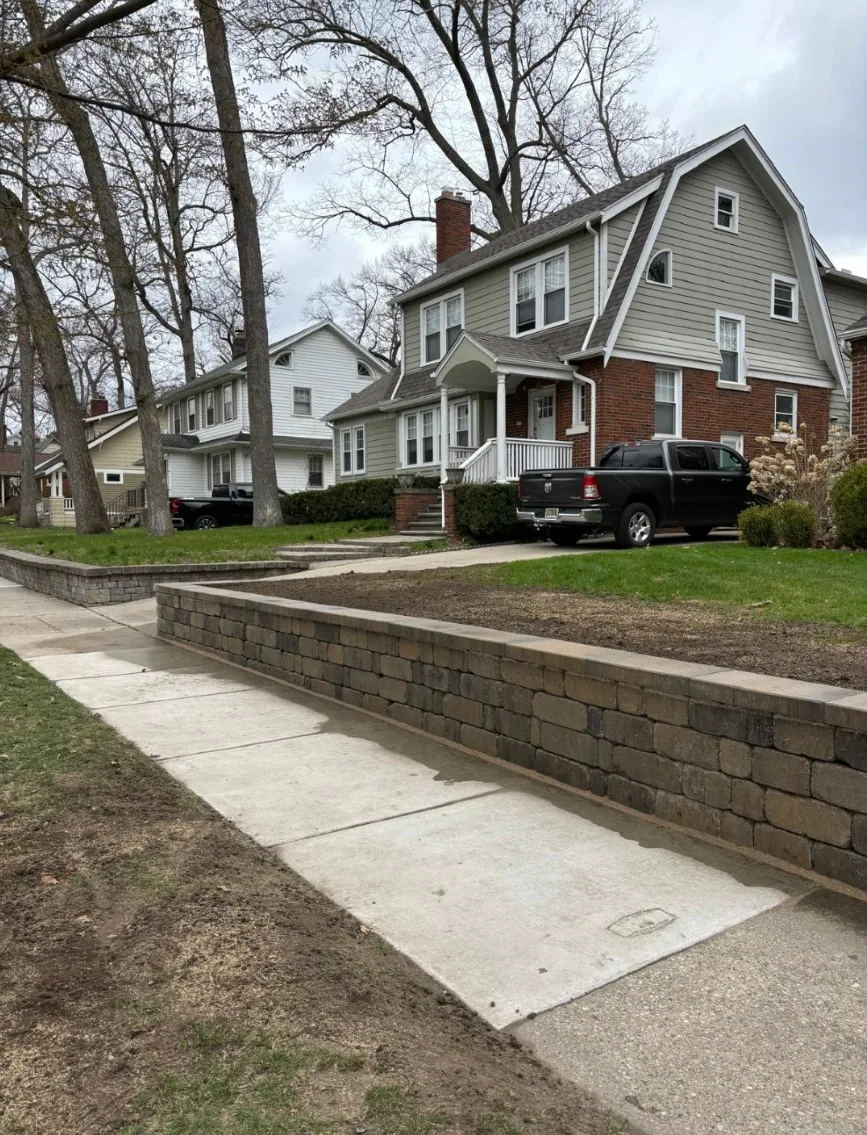
Segmental block retaining walls and seating walls, started level below grade and drained behind, so they hold the grade they were built to hold.
What's included
Retaining Walls in Metro Detroit
A retaining wall is doing a structural job, and the part doing most of that job is invisible once the wall is finished: a compacted base trench below grade, a first course set dead level, and drainage stone behind the block so water moving through the soil has somewhere to go. Walls fail because water builds up behind them, or because the first course was never level. Almost never because the block was not strong enough.
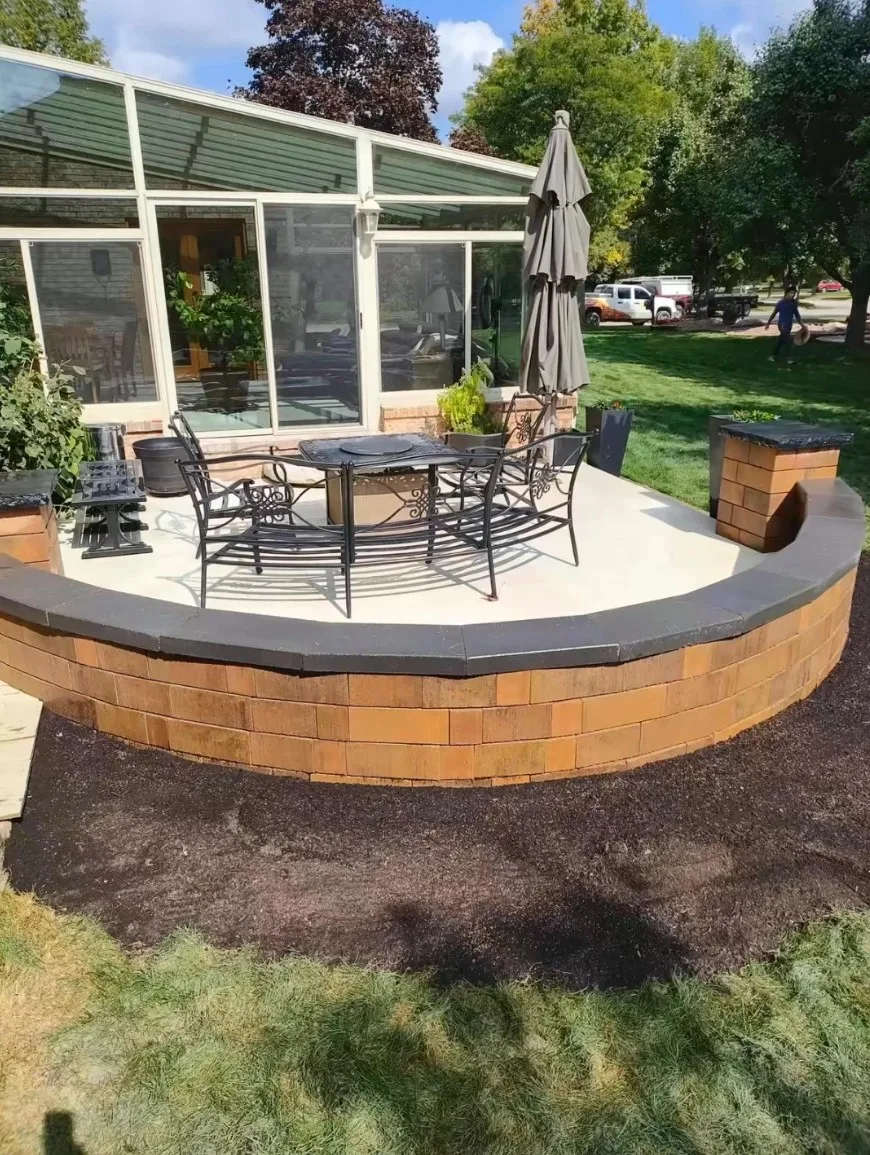
Phoenix Daya builds new segmental block walls — retaining walls holding a grade change, seating walls wrapped around a patio, and raised-patio walls — and rebuilds existing walls that have started to lean, bulge or step out of line.
Doing both matters. A wall that has begun to move is not usually a lost cause: the block itself is often perfectly good and gets re-used, and what actually gets rebuilt is the base and the drainage that let it move in the first place.
What you get
- Segmental block retaining walls holding a grade change
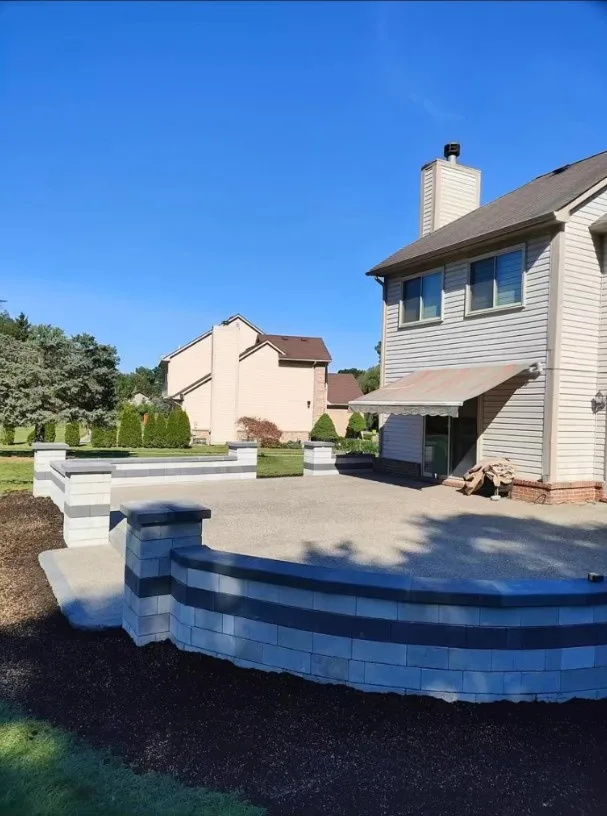
- Seating walls and raised-patio walls, curved or straight
- Buried, compacted base course so the wall starts level
- Drainage stone and backfill behind the wall, not just soil pushed back in
- Leaning and bulging walls taken down and rebuilt, re-using sound block
- Cap course cut to the curve and secured
What to expect
How a wall goes up
No mystery and no surprises — here is the order the work actually happens in.
Layout and excavation
We mark the wall line, then dig the base trench below finished grade — the first course of a block wall is meant to be buried, and a wall that starts at ground level has nothing holding its toe.
Base course
Compacted aggregate goes into the trench and the first course is set dead level, block by block. Every course above inherits whatever this one does, so this is where the time goes.
Build the courses
Block is laid up course by course with the setback the system calls for, cutting where a curve or a corner needs it.
Drainage and backfill
Drainage stone goes in behind the wall and is backfilled in lifts, so water in the soil can get out instead of building up and pushing on the block.
Cap course
Caps are cut to follow the curve and secured down, which is what makes the top of the wall look finished rather than stacked.
Grade and clean up
Grade is finished off at the top and the toe of the wall, and the site is cleaned down and cleared.
Our work
Retaining and seating walls
Phoenix Daya block wall work — grade-holding walls and curved seating walls around raised patios.
Questions
Retaining Walls FAQ
Why is my retaining wall leaning?
Most often water. Without drainage stone behind it and a route out, saturated soil pushes hard on the back of a wall, and the wall goes where it is pushed. The other common cause is a base course that was set on soil instead of compacted aggregate, or was never level to begin with.
Can a leaning wall be repaired, or does it have to come down?
It depends how far it has gone. A wall that has moved is usually taken down and rebuilt rather than propped, but the block itself is often fine and goes straight back up. What actually gets rebuilt is the base and the drainage.
How tall can you build?
Segmental block systems have height limits, and past a certain height a wall needs engineering and, depending on the community, a permit. If what you are describing is in that territory we will tell you, rather than build something that should not be there.
Can a wall double as seating?
Yes, and a seating wall around a patio is one of the most-used things you can build in a yard. Built at the right height with a cap course on top, it takes the place of a lot of furniture.
Can you match an existing wall?
We will get as close as the block currently available allows. Older block styles are sometimes discontinued, in which case the usual approach is to rebuild a whole run in one material rather than leave a visible patch.
Free estimate on retaining walls
Tell us the size and what's there now, and we'll price it. Phoenix Daya Brick Paving LLC covers Detroit and communities across Southeast Michigan.
Get a price
Ask about retaining walls
Send the details and we'll come back with a number. Prefer to talk it through? Call instead — it's usually faster.
Also from Phoenix Daya
Other services
Retaining Walls near you
Every community we cover has its own page. Start with the closest one to you.
- DetroitPatios, walks, driveways and repairs across the city.
- DearbornPaver work and year-round upkeep west of the city line.
- Dearborn HeightsDriveways, patios and seasonal service for the Heights.
- Redford TownshipBrick paver work and seasonal upkeep in Redford.
- LivoniaPatios, retaining walls and full-season property care.
- Allen ParkDownriver paver installation, repair and upkeep.
- Lincoln ParkWalkways, steps and seasonal service Downriver.
- MelvindaleSmall-city paver work with a direct line to the owner.
- EcorsePaver installation, repair and year-round property care.